
Sage Meier · 15 September 2026
Court Autonomy Concerns Shaping Youth Job Scheme Results in Central European Capitals
Court autonomy concerns have begun to influence how youth job schemes operate across Central European capitals, where legal rulings now determine funding flows, eligibility criteria, and program timelines in ways that reshape outcomes for thousands of participants each year. Governments in Prague, Budapest, Bratislava, and Vienna have rolled out initiatives funded through national budgets and European Union allocations, yet judicial decisions on administrative independence repeatedly alter implementation details. Data from national labor ministries show participation rates fluctuating by up to 18 percent in regions where courts have issued injunctions against certain eligibility rules since 2024.
Background on Youth Employment Programs
Youth job schemes in these capitals target individuals aged 18 to 29 who face barriers entering the workforce, offering training stipends, internship placements, and wage subsidies that last between six and twelve months. The European Commission tracks these efforts through its Youth Guarantee framework, which requires member states to provide offers of employment, education, or training within four months of registration. In 2025 alone, national reports indicated that over 240,000 young people in the four capitals registered for such programs, with completion rates averaging 67 percent according to aggregated labor market statistics.
Legal frameworks supporting these schemes rest on statutes passed between 2021 and 2023 that delegate authority to regional employment offices while reserving oversight to ministries. Court challenges have focused on whether those ministries retain sufficient independence when political leadership changes occur, prompting judges in multiple jurisdictions to review whether funding decisions comply with constitutional separation of powers. Observers note that such reviews gained momentum after several high-profile cases in 2025 where administrative courts suspended portions of subsidy payments pending clarification of procedural safeguards.
Judicial Developments Across Capitals
In Prague, the Administrative Court issued rulings in early 2026 that required employment offices to publish detailed scoring criteria for applicant selection, a change that delayed the spring intake cycle by six weeks but increased transparency metrics reported by the Czech Labor Office. Budapest courts followed with decisions that upheld ministry authority over program design yet struck down clauses allowing expedited approvals for certain private-sector partners, resulting in revised contracts that now undergo extended review periods. Bratislava and Vienna have seen parallel proceedings where judges examined whether regional courts possess adequate insulation from executive influence when adjudicating disputes over trainee placement quotas.
September 2026 Rulings and Immediate Effects
September 2026 brought coordinated announcements from courts in three capitals that further refined eligibility verification processes. The Prague court required additional documentation for applicants whose prior internships occurred at state-linked enterprises, while Budapest and Bratislava panels mandated independent audits of placement success rates before releasing the final tranche of annual funding. These steps coincided with the release of mid-year labor statistics showing that youth unemployment in the four capitals stood at 11.4 percent, down from 13.2 percent the previous September yet still above the EU average of 9.8 percent. Program administrators adjusted outreach campaigns accordingly, shifting emphasis toward applicants from rural districts whose court-validated eligibility pathways now include longer documentation windows.
Data Patterns and Regional Variations
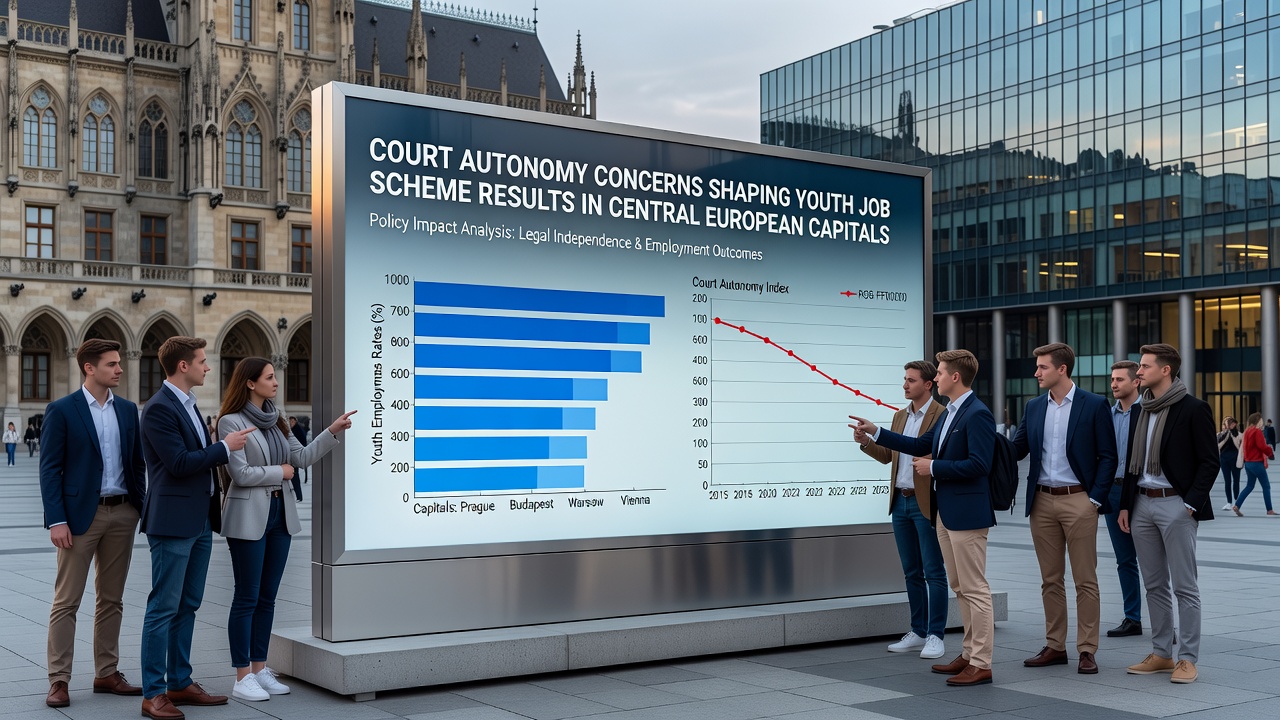
Statistics compiled by national statistical offices reveal that completion rates for court-affected cohorts differ noticeably from unaffected groups. In Prague districts where new documentation rules applied after the September rulings, completion reached 71 percent compared with 64 percent in areas still operating under prior procedures. Budapest figures indicate a similar divergence: programs subject to extended contract reviews posted placement rates into permanent roles at 48 percent versus 39 percent for earlier cohorts. Researchers tracking these outcomes through longitudinal surveys attribute the differences to heightened scrutiny that filters participants more carefully at intake while extending support services during the placement phase.
Cross-border comparisons appear in reports issued by the OECD, which examined labor market integration across member states and highlighted how judicial oversight mechanisms correlate with slower initial rollout but steadier retention once participants enter training. The same analysis noted that capitals with stronger formal protections for administrative court independence recorded fewer appeals against placement decisions, reducing administrative overhead by an average of 12 percent per program cycle. Those patterns align with data released by the European Commission in its annual youth employment review, which covers implementation across all member states and identifies procedural clarity as a consistent predictor of higher long-term employment retention.
Stakeholder Responses and Ongoing Adjustments
Employment agencies in the capitals have responded by updating internal guidelines to incorporate recent court directives without awaiting further litigation. Training providers report increased demand for modules that address legal compliance documentation, while participant feedback collected through anonymous surveys indicates greater confidence in the fairness of selection once scoring rubrics become public. Industry associations representing small and medium enterprises, which host many of the subsidized placements, have formed working groups to standardize reporting templates that satisfy both court requirements and program efficiency targets. These adjustments continue to evolve as additional cases move through appellate stages scheduled for late 2026 and early 2027.
Conclusion
Court autonomy concerns continue to intersect with youth job scheme administration in Central European capitals through a series of rulings that refine eligibility, documentation, and funding release procedures. National labor data through September 2026 demonstrate measurable shifts in participation and completion metrics that track closely with the timing of judicial interventions. As administrative courts maintain their role in reviewing executive actions, program operators and participants alike adapt to frameworks that emphasize procedural safeguards alongside employment outcomes. The resulting landscape reflects ongoing calibration between legal oversight and operational delivery across the region.