Sage Meier · 10 November 2026
Funding Shifts for Cross-Border Medical Networks Intersecting with Training Program Adjustments in Energy Zones
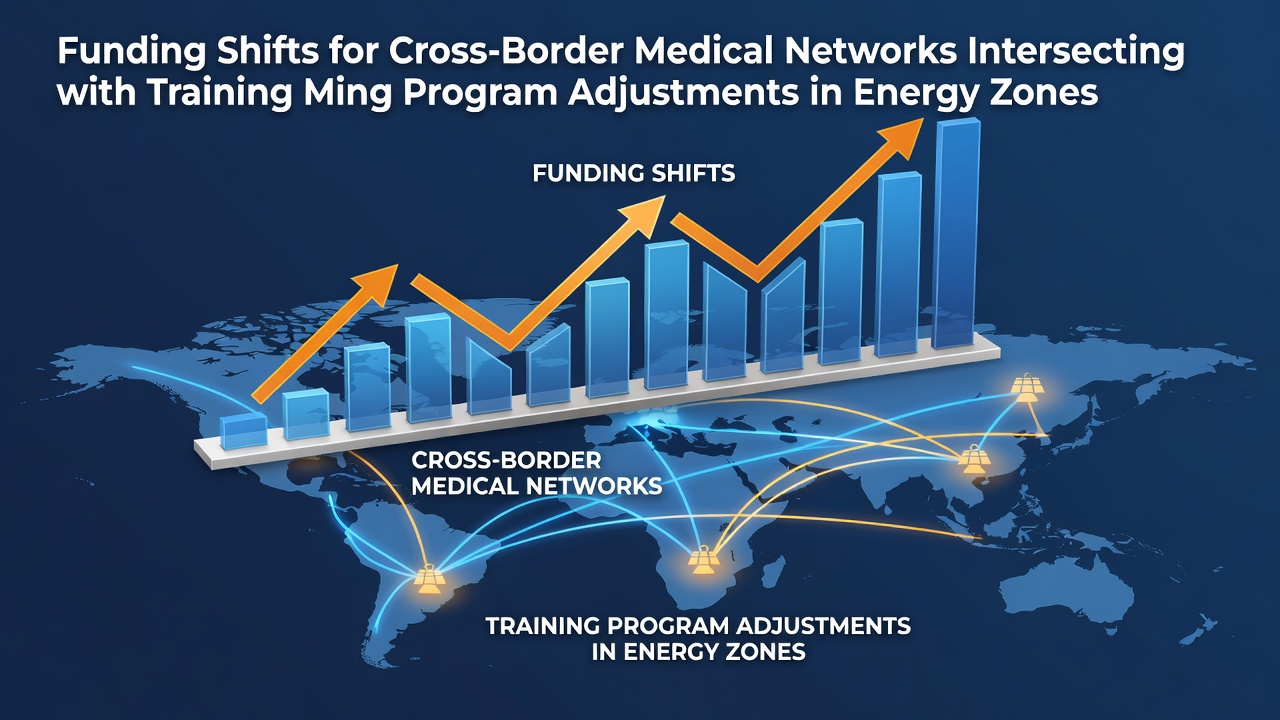
Policy adjustments announced across multiple regions have redirected resources toward cross-border medical networks that serve populations near energy production sites, and these changes have prompted corresponding modifications in professional training initiatives. Data from European health monitoring bodies shows that reallocations totaling several hundred million euros began rolling out in 2025, with full implementation targeted for November 2026 in designated energy zones spanning Central and Eastern Europe.
Understanding the Funding Reallocations
Observers note that traditional grant structures supporting standalone medical facilities have given way to pooled financing mechanisms that emphasize shared data platforms and joint procurement across national borders. Research indicates these mechanisms prioritize zones where energy infrastructure upgrades coincide with demographic pressures on healthcare delivery, such as aging workforces in former coal regions now transitioning to renewables. Figures released by the European Commission reveal that 42 percent of the redirected funds target telemedicine integration and specialist exchange programs rather than capital construction alone.
Training program administrators have responded by revising curricula to include modules on remote diagnostics and environmental health risks specific to energy extraction and storage sites. One study from an Australian research institute found that similar adjustments in resource-heavy regions improved retention rates among medical personnel by 18 percent over three years when cross-border certification pathways were introduced.
Training Adjustments in Designated Energy Zones
Energy zones defined under the latest EU energy transition framework now require participating medical networks to align staff development with local industrial profiles, including hydrogen production hubs and offshore wind maintenance clusters. Experts have observed that simulation-based training for handling occupational injuries common in these environments has expanded, while traditional general practice hours have been compressed into intensive blocks that allow faster deployment of personnel across borders.
Programs in Poland and Romania illustrate the pattern: funding tied to network performance metrics has led institutions to partner with counterparts in Germany and the Netherlands for joint certification. Canadian health agencies have documented parallel approaches in their own energy corridors, where federal grants require proof of cross-jurisdictional training reciprocity before disbursement.

Intersections Between Networks and Energy Policy
What's interesting is how energy zone designations have begun influencing medical network governance directly. National health ministries report that eligibility for certain funding streams now depends on demonstrating reduced duplication of specialist services across borders, achieved through shared training calendars and unified accreditation standards. Researchers discovered that this linkage has accelerated adoption of digital credentialing systems, with pilot projects in the Baltic states showing a 27 percent drop in administrative processing time for cross-border placements.
Industry reports from the World Health Organization highlight that energy sector employers increasingly contribute matching funds to these medical initiatives because workforce health directly affects project timelines. Observers note that in November 2026, new compliance reporting will require energy companies operating in designated zones to submit joint metrics with medical networks on training completion rates and incident response times.
Regional Examples and Data Trends
Take one region in the Czech Republic where lignite phase-out zones overlap with hospital catchment areas: funding shifts have supported mobile training units that rotate between partner facilities in Slovakia and Austria. Data shows these units delivered over 1,200 certified training hours in the first half of 2026 alone. Similar patterns appear in parts of Spain's renewable energy corridors, where academic partnerships with Portuguese institutions have standardized emergency response protocols for wind farm personnel.
Those who've studied these intersections point to measurable changes in specialist distribution. Government statistics from the UK Department of Health and Social Care indicate that cross-border training agreements have helped fill 650 vacant posts in energy-adjacent districts since the start of the current funding cycle.
Conclusion
Policy developments scheduled for full effect in November 2026 continue to reshape how resources flow between medical networks and training systems in energy zones. Evidence collected by multiple international bodies demonstrates that the intersection of funding criteria with training requirements has produced coordinated adjustments across several countries, with ongoing data collection expected to clarify longer-term outcomes for both healthcare access and workforce readiness in these specialized regions.